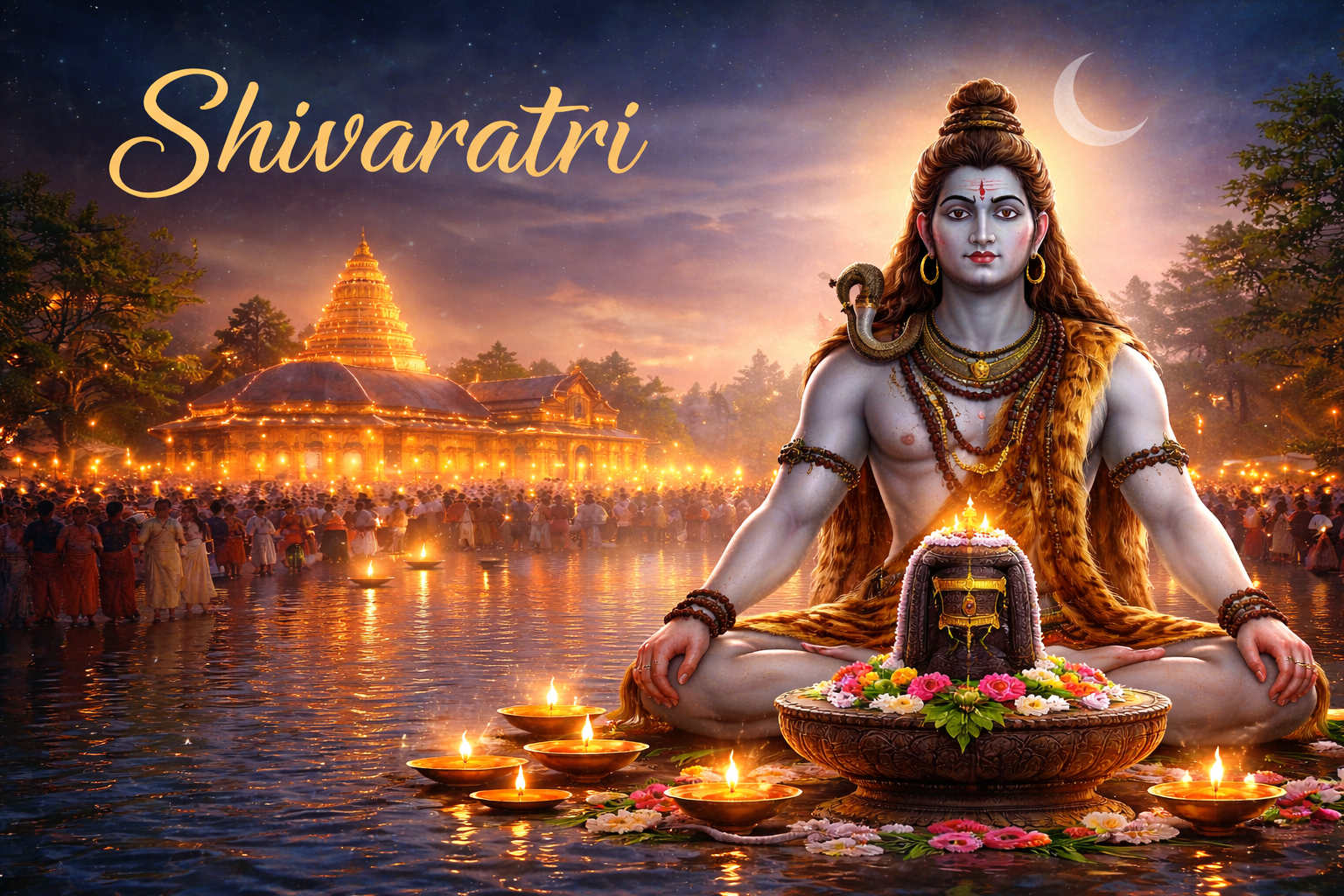
Shivaratri, also known as Maha Shivaratri, is one of the most sacred Hindu festivals dedicated to Lord Shiva. It is observed every year with fasting, prayers, and night-long worship. Shivaratri is believed to be a powerful time for spiritual cleansing, self-discipline, and inner awakening.
Unlike colourful and festive celebrations, Shivaratri is calm and disciplined in nature. Devotees focus on silence, devotion, meditation, and self-control. Across India, millions of people observe Shivaratri by visiting Shiva temples, performing special poojas, and staying awake throughout the night in prayer.
The word Shivaratri means “the night of Lord Shiva.” This sacred night is believed to carry strong spiritual energy, making it ideal for worship, meditation, and reflection. In Hindu belief, Lord Shiva represents transformation, the destruction of negativity, and the path to liberation.
Although Shivaratri occurs every month, Maha Shivaratri is the most important and spiritually significant. Devotees believe that sincere prayers offered on this night bring peace of mind, prosperity, and spiritual growth.
The importance of Maha Shivaratri is explained through several ancient stories found in Hindu scriptures.
One popular belief is that Shivaratri marks the divine marriage of Lord Shiva and Goddess Parvati, symbolising the balance between energy and consciousness. Another legend describes Lord Shiva appearing as an endless pillar of light (Jyotirlinga), representing the eternal and formless nature of the divine.
The famous Samudra Manthan story explains how Lord Shiva consumed deadly poison to protect the universe. This act symbolises sacrifice and compassion, and Shivaratri honours Shiva’s role as the protector of cosmic balance.
Shivaratri is not just a religious festival; it is a deeply spiritual observance.
Spiritually, Shivaratri represents:
Removal of darkness and ignorance
Control over desires and negative thoughts
Self-discipline through fasting
Awakening of inner awareness
The practice of staying awake throughout the night (Jagaran) symbolises alertness and mindfulness. Fasting helps purify the body and mind, allowing devotees to focus on prayer and spiritual growth.
Shivaratri Abhishekam
Abhishekam is one of the most important Shivaratri rituals. The Shiva Lingam is bathed with water, milk, honey, curd, ghee, and tender coconut water. Each offering symbolises purity, devotion, and surrender.
Bilva Leaf Offering
Offering Bilva leaves is considered highly auspicious on Shivaratri. It is believed to please Lord Shiva and bring peace, health, and blessings.
Fasting and Night-Long Worship
Devotees observe full or partial fasting and spend the night chanting Om Namah Shivaya, attending bhajans, and participating in temple rituals.
Special Temple Programs
On Maha Shivaratri, Shiva temples conduct:
Special Abhishekams
Rudrabhishekam
Night-long bhajans
Spiritual discourses
Maha Shivaratri 2026 will be observed on Sunday, 15 February 2026.
The festival falls on Krishna Paksha Chaturdashi in the Hindu month of Phalguna. The midnight period (Nishita Kaal) is considered the most auspicious time for Shivaratri pooja, and many devotees prefer to perform prayers during this time.
Although Guruvayur is widely known for the worship of Lord Krishna, Shivaratri in Guruvayur holds special spiritual importance for pilgrims. Many devotees believe that observing Shivaratri while visiting this sacred town brings added spiritual merit, as the region is deeply connected with devotion, discipline, and temple traditions.
During Shivaratri 2026 in Guruvayur, the town is expected to witness a noticeable increase in pilgrim movement. Devotees from different parts of Kerala and nearby states arrive to participate in night-long poojas, early morning rituals, and temple prayers. The calm spiritual atmosphere of Guruvayur during Shivaratri supports meditation, chanting, and silent prayer.
Many pilgrims visiting Guruvayur Temple on Shivaratri also include Shiva worship as part of their spiritual journey. This practice reflects the belief that devotion to Lord Shiva during Shivaratri complements and strengthens one’s overall spiritual experience in Guruvayur.
The Mummiyoor Temple, located close to Guruvayur Temple, is one of the most important Shiva temples in the region and plays a key role in Shivaratri observance. For many devotees, Mummiyoor Temple Shivaratri darshan is considered an essential part of their pilgrimage.
During Maha Shivaratri, the temple traditionally conducts special spiritual programs that continue throughout the night. These include:
Special Shivaratri Abhishekam performed with devotion and ritual purity
Dedicated poojas held at regular intervals during the night
Continuous chanting of Shiva mantras and devotional prayers
The serene environment of Mummiyoor Temple during Shivaratri allows devotees to engage in focused prayer and reflection. Many pilgrims prefer spending significant time at the temple, especially during late-night and early-morning hours, as these periods are considered highly auspicious.
Because of the importance of these rituals, Mummiyoor Temple attracts a large number of devotees during Shivaratri.
(Program timings and specific rituals may vary each year.)
Shivaratri attracts a large number of devotees to Guruvayur and nearby temples. Since rituals continue late into the night, staying close to the temple area is important for comfort and convenience.
Hotel Newline Orchid offers a peaceful and hygienic stay for devotees visiting Guruvayur during Shivaratri. Located near Guruvayur Temple and Mummiyoor Temple, the hotel is ideal for families and pilgrims seeking a comfortable stay during Shivaratri 2026 in Guruvayur.